When should I call for help on Lake Erie?
The first step to responding to an emergency is recognizing when one is happening. Call for immediate assistance if you encounter any of the following scenarios:
Immediate Danger Situations
- Taking on water that cannot be controlled by pumps
- Fire or explosion on board
- Collision with another vessel, object, or person
- Running aground with hull damage or inability to free your vessel
- Loss of steering or propulsion in heavy traffic, rough conditions, or near hazards
Medical Emergencies
- Serious injury, chest pain, difficulty breathing, or loss of consciousness
- Hypothermia or heat-related illness
- Any condition requiring urgent medical attention
Weather & Environmental Hazards
- Severe weather threatening vessel safety (high winds, lightning, large waves)
- Fog so thick that you cannot navigate safely
- Caught in dangerous conditions beyond your vessel's or crew's capabilities
Stranded or Adrift
- Mechanical breakdown with no auxiliary power
- Out of fuel and unable to reach port
- Anchor dragging toward hazards
- Disabled and drifting toward dangerous areas
When in doubt whether your situation qualifies as an emergency, call anyway. It's always better to request help early rather than wait until conditions worsen. Responders will know what to do if your boat breaks down on Lake Erie and will advise along the way.
Who should I call for help if my boat breaks down on Lake Erie?
Who you should call in the event of a boating emergency depends on the severity of the situation, where the breakdown occurs, and whether there is an imminent threat to life or property.
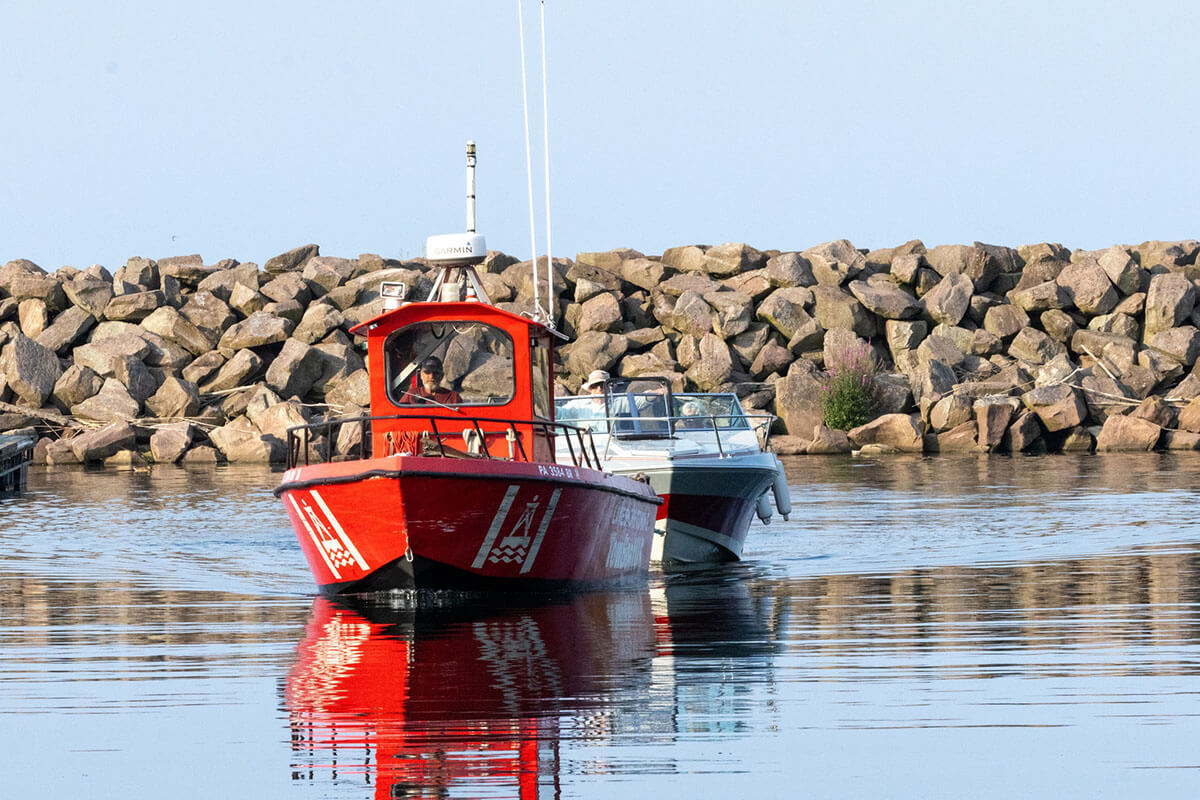
Lakeshore Towing
- Lakeshore Towing Phone Number: (814) 453-6387
- VHF Radio: Channel 16
- Coverage Area: Pennsylvania waters of Lake Erie (directly); all U.S. waters of Lake Erie (through Interlake Towing System affiliates)
- Seasonal Availability: May 1 through Nov. 1
- Best to call when: You’re stuck or stranded but not in immediate physical danger (i.e., matters of urgency).
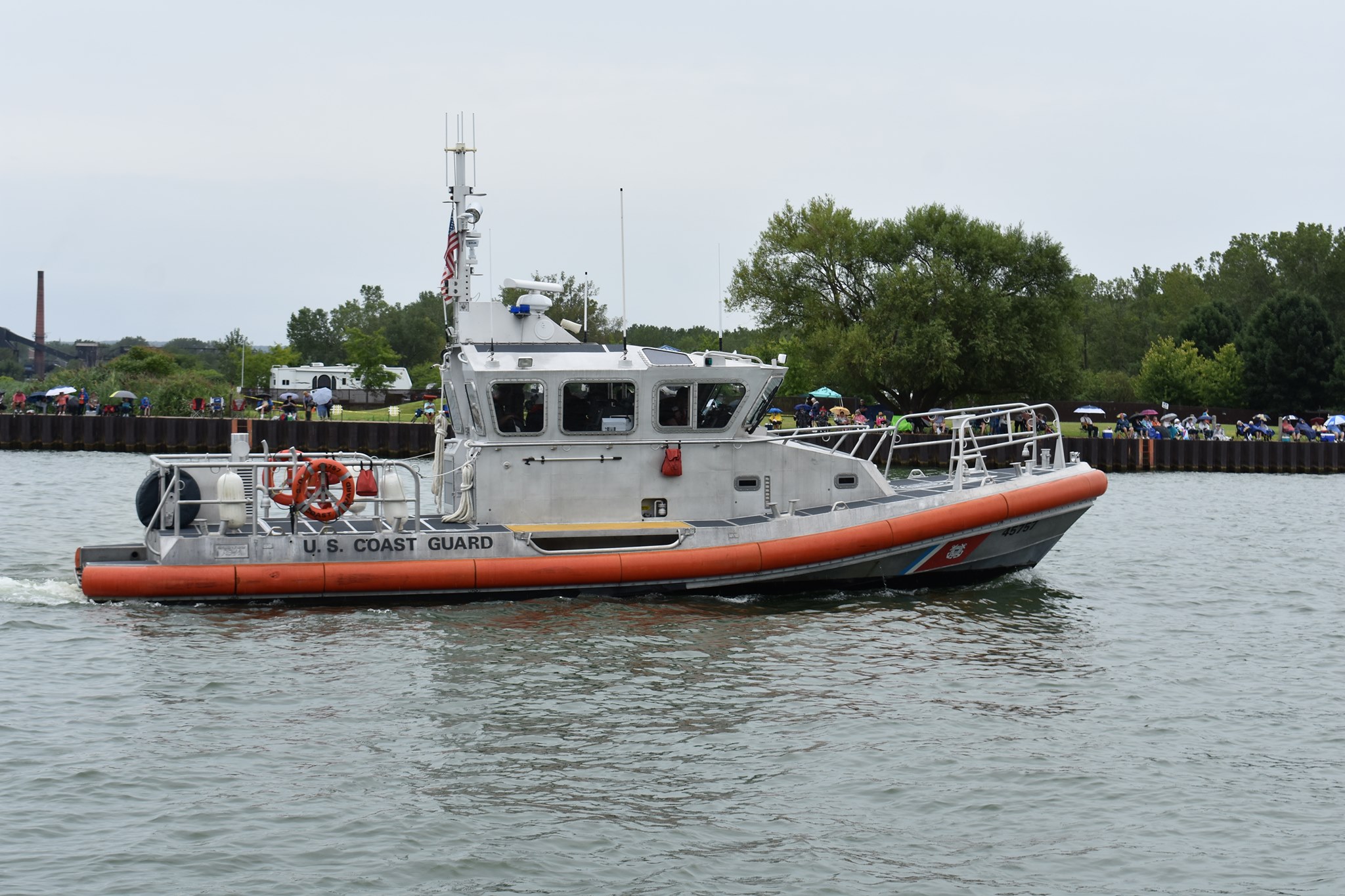
United States Coast Guard Station Erie
- Lake Erie Coast Guard Phone Number: (814) 434-3648
- VHF Radio: Channel 16
- Coverage Area: Approximately 800 square miles along the shore of Lake Erie to the international border
- Seasonal Availability: Year-round
- Best to call when: There is an immediate risk to life or property (e.g., true emergencies), or your boating incident occurs during the off-season.
Initiating a Distress Call
With Your VHF Radio
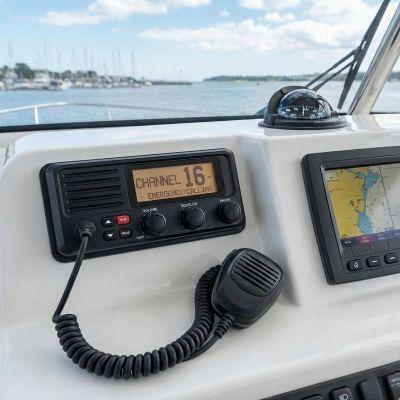
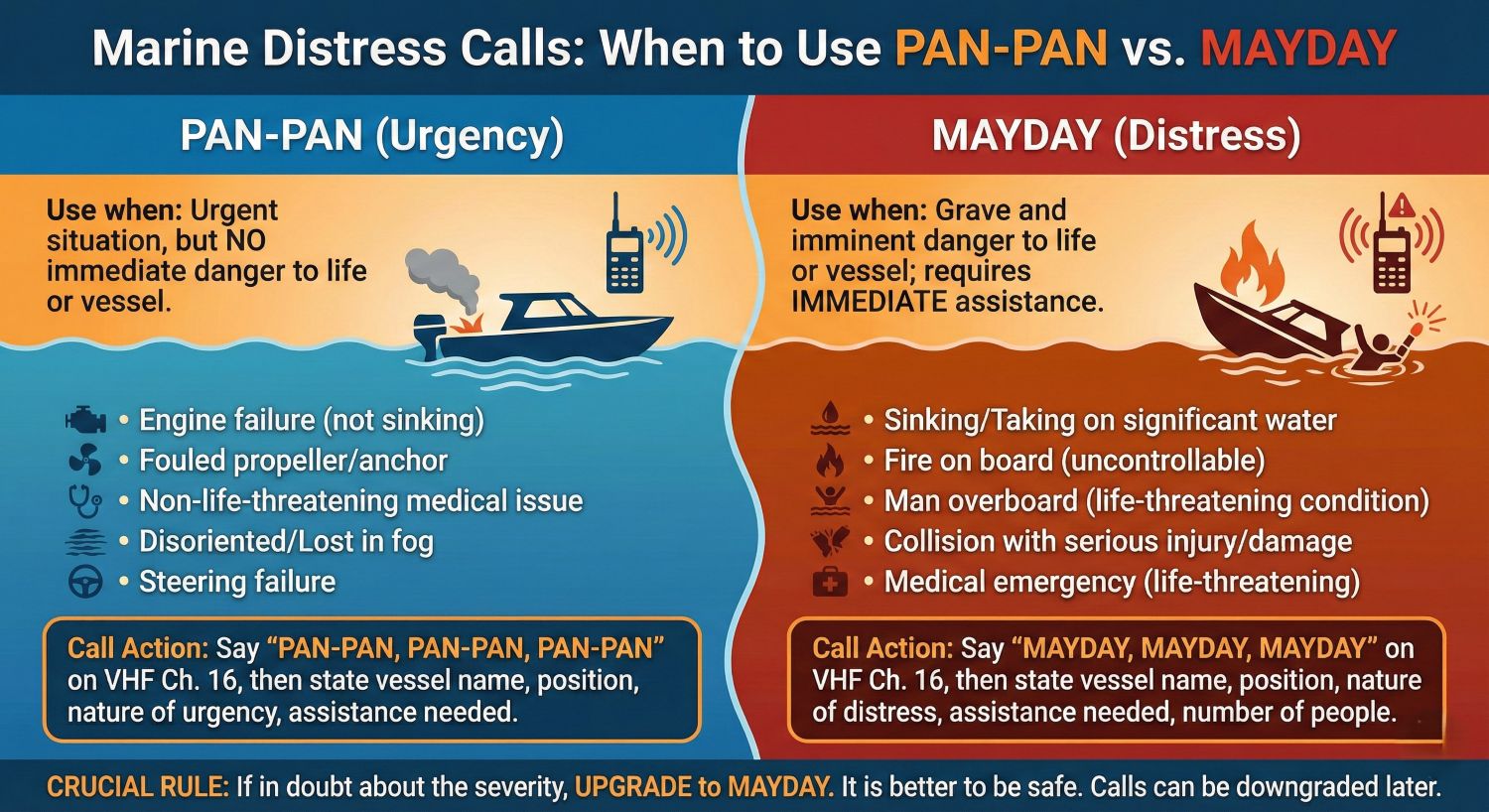
The standard method for life-threatening emergencies is to use your VHF Marine Radio on Channel 16 to make a MAYDAY call.
Note that MAYDAY is to be used for serious and life-threatening emergencies only! If you are not in grave or imminent danger, but need urgent assistance (e.g., engine failure, controllable leak), you would use the signal "PAN-PAN" (pronounced pahn-pahn) instead of MAYDAY, followed by the same information.
Procedure
- Tune to Channel 16
- Ensure your radio is on and set to high power.
- The Distress Signal
- Say "MAYDAY, MAYDAY, MAYDAY".
- Say "THIS IS [Vessel Name and/or Call Sign] (spoken three times)".
- The Distress Message
- Say "MAYDAY" and your Vessel Name.
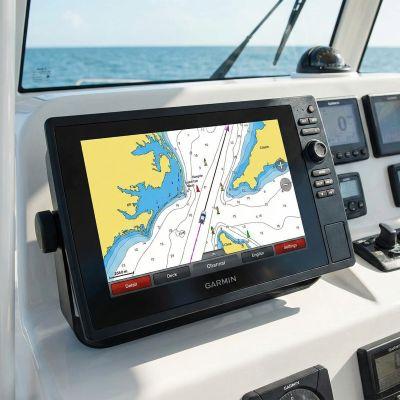
- Report your Position clearly and slowly.
- Report the Nature of your Emergency (what happened).
- Report the Number of people on board and the condition of any injured.
- Describe your Vessel (type, color, length).
- Say "OVER" and wait for a response.
- Repeat
- If you receive no immediate response, repeat the full distress call.
Digital Selective Calling
If your VHF radio has digital selective calling (DSC) capability and is connected to your GPS:
Press the Red DSC Distress Button to automatically transmit a digital distress alert on VHF Channel 70 (156.525 MHz), which includes your vessel's unique MMSI (Maritime Mobile Service Identity) and, most importantly, your current GPS position. The USCG continuously monitors Channel 70 for these digital alerts. This is the fastest and most efficient way to signal distress.
You can register your recreational vessel for a domestic-use MMSI number through an issuing body such as the BoatU.S. or U.S. Power Squadrons. You will need to provide your boat’s name, length, type, hull ID (HIN), state registration number, owner information, and emergency contacts.
What Information to Give During a
Boating Emergency on Lake Erie
Essential Distress Information (P.O.L.E.M.)
|
Information |
Details |
|
Position |
Your exact location, ideally using GPS coordinates (latitude and longitude) or a bearing and distance from a known navigational landmark (e.g., "5 miles south of Buoy 3"). |
|
Onboard |
The number of people currently on board and the condition of any injured persons. |
|
Location |
The name and/or call sign of your vessel (repeat this 3 times). Also mention your vessel's description. |
|
Emergency |
The nature of your distress (e.g., "Sinking," "On fire," "Man Overboard," "Medical Emergency"). |
|
Measures |
The kind of assistance required and what immediate action you are taking (e.g., "We are using the bilge pump," "Preparing to abandon ship"). |
Additional Information
If time and circumstances permit, be ready to provide the following details as well:
- Vessel Description: Type (sail, power), length, color of hull, superstructure, and any distinguishing markings.
- Seaworthiness: Is the boat taking on water? Is it operable?
What Happens Next
Non-Emergency Situations
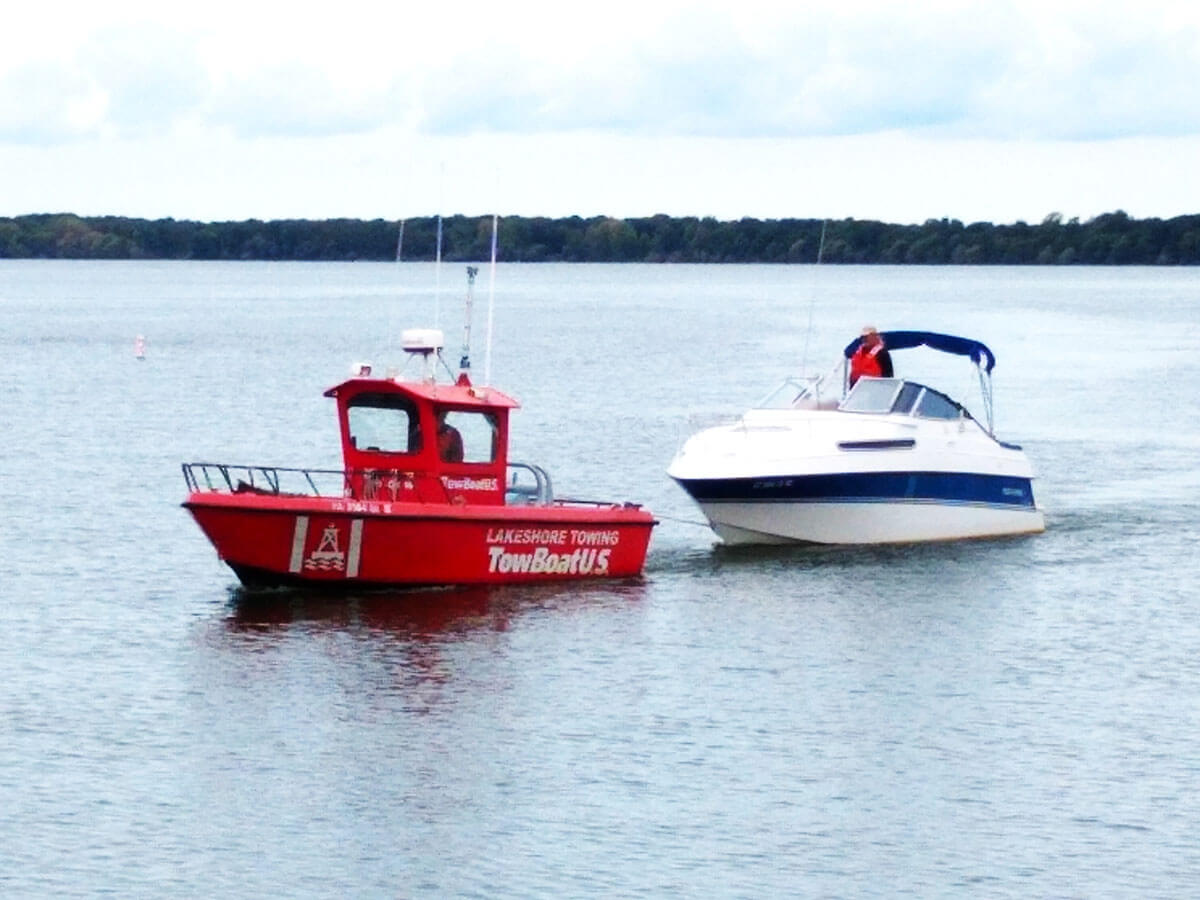
For situations where there is no immediate threat to life or vessel (e.g., engine failure, out of fuel, soft grounding), you would have used a PAN-PAN call or a direct call to a commercial towing service (like Lakeshore Towing).
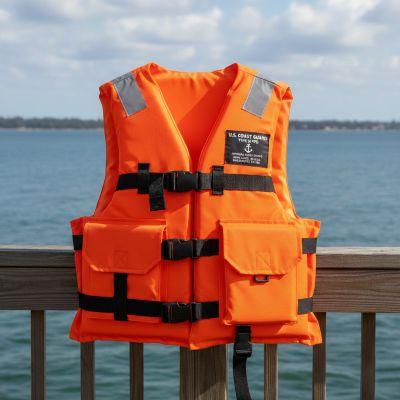
1. Ensure all crew are safe: If weather/water conditions are rough or if anyone is working on deck, have them put on a Personal Flotation Device (PFD).
2. Maintain position: If possible, drop anchor to prevent drifting into a more dangerous area (e.g., shoals, shipping lanes). If anchoring is not an option, constantly monitor your GPS position and drift rate to provide updates.
3. Listen to working channel: After making the initial call on VHF Channel 16, you will be instructed to switch to a working channel (often 22A for the USCG, or a specific channel for a tow company). Monitor this channel for updates and instructions.
4. Attempt safe fixes: If you are a trained professional, you may attempt minor, safe repairs (e.g., bleeding a diesel engine, changing a fouled spark plug). Do not attempt repairs that risk injury or further damage if you are untrained or in rough seas.
5. Ready the towing gear: Clear your decks and have lines, fenders, and the bow cleat ready. The tow operator will provide their own line, but your crew should be ready to assist with securing it as instructed.
6. Increase your visibility: Turn on your navigation lights if visibility is poor or it is near dusk/night.
What happens during a Lake Erie Tow
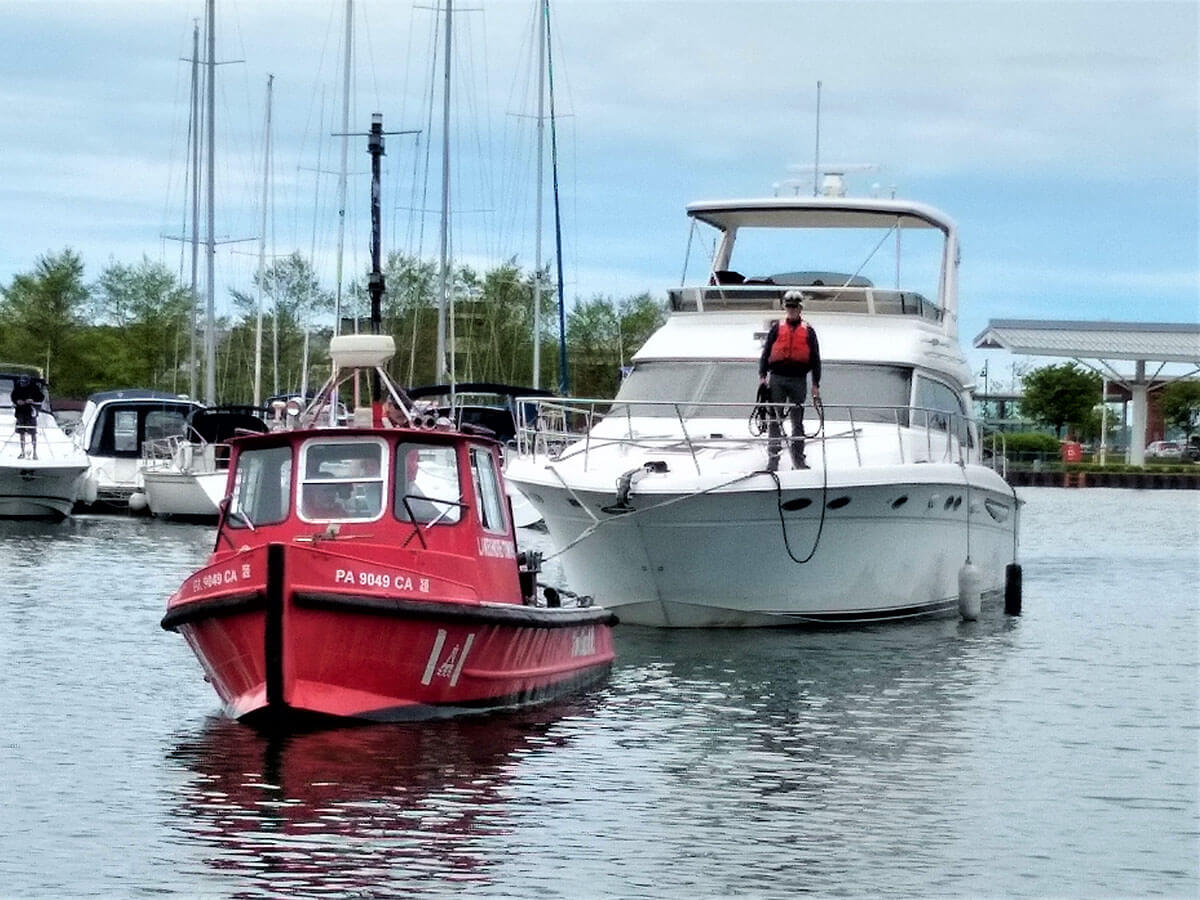
Here’s what to expect when Lakeshore Towing arrives at the scene.
1. The operator will assess the condition of the vessel, water, and immediate surroundings.
2. The operator will pass a heavy-duty tow line (often flexible and shock-absorbent nylon) to your deck.
3. You will secure the tow line to your vessel’s strongest point (often a tow bridle or the bow eye). Meanwhile, the operator will secure the other end of the tow line to their towing bit or post.
4. The tow operator will help your crew place chafe guards ( a piece of leather, hose, or heavy fabric) wherever the tow line rubs against your boat to prevent the line from being cut and protect your boat’s finish.
5. The tow operator will take over navigation, slow and steady to avoid a sudden shock load. If your rudder and steering are functional, you may be advised to keep your wheel centered or slightly turned to keep the vessel straight.
6. You will be asked to monitor your boat’s tow line connection and position continuously, reporting any changes or issues immediately over radio.
7. Final approach and docking. Wind and current conditions can present a challenge, so follow the tow operator’s instructions carefully. Once safely positioned near the dock, the tow line will be slowly released. The tow operator will hold your vessel securely until you can safely secure your own dock lines and fenders.
8. The tow operator will complete the necessary paperwork, which confirms the services rendered and is used for payment (either through your membership plan or direct billing).
Emergency Situations
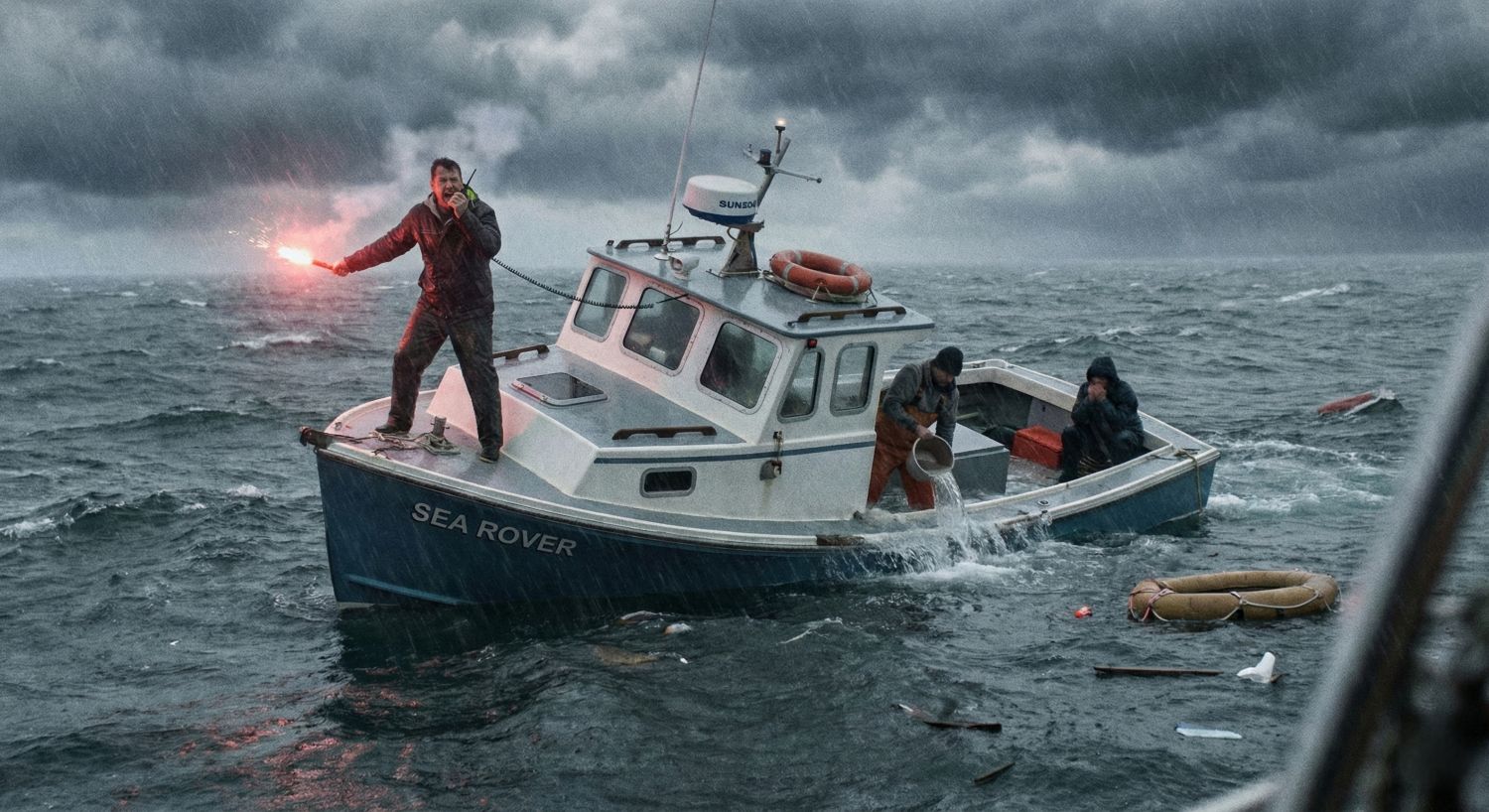
For situations involving grave and imminent danger (after a MAYDAY call to the USCG on Channel 16), the focus is solely on survival.
1. Put on life jackets: Immediately have everyone put on their PFDs. Secure all straps. This is the single most important action.
2. Fight fire / control leak: If there is a fire, use extinguishers, turn off fuel, and position the boat so the fire is downwind. If you are taking on water, locate the leak and use all available means to plug it (e.g., bilge pumps, crash pump, rags, bedding) and bail.
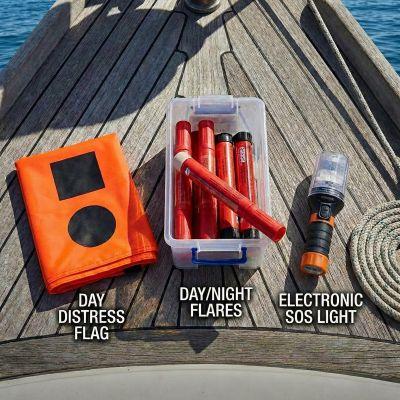
3. Ready the ditch bag: Ensure your Ditch Bag (also known as a grab bag/abandon ship bag) is accessible. This bag contains survival essentials: EPIRB/PLB, flares, handheld VHF, water, first aid, necessary medications, and documents.
4. Maintain radio watch: Keep the VHF radio tuned to Channel 16. The Coast Guard may contact you for updates, or a nearby vessel may acknowledge your MAYDAY. Be ready to transmit your position again.
5. Deploy visual signals: When you hear or see a potential responder, prepare and deploy your Visual Distress Signals (VDS) – an orange smoke signal flare in daytime or an aerial red flare at night. If you have an EPIRB (Emergency Position Indicating Radio Beacon) or PLB (Personal Locator Beacon), ensure it is activated and the antenna is clear.
6. Maintain control: Calmly assign crew specific, manageable tasks and keep everyone together. Panic is contagious and dangerous.
7. Safely abandon ship: If you must abandon ship, stay with the vessel or its wreckage if possible, as it is a much larger visual target than people in the water. Secure the life raft (if applicable) and the ditch bag to your body before entering the water.
The U.S. Coast Guard Sector Buffalo coordinates search and rescue operations and communications throughout the eastern Great Lakes, with 24/7 emergency boat towing on Lake Erie handled by U.S. Coast Guard Station Erie.
Lake Erie Boat Safety Emergency Guide
Safe Boating Practices
Before You Head Out
- Get a Safety Check: Before the season begins, consider getting a free Vessel Safety Check from the U.S. Coast Guard Auxiliary or America’s Boating Club (U.S. Power Squadrons) to verify that your boat meets all federal and state requirements.
- Inspect Vessel and Equipment: Check fuel and oil levels, ensure your bilge pump is working, and that you have an effective anchor with enough line for the depths you will be traveling.
- File a Float Plan: Provide a float plan to a reliable friend or relative on shore. Include a description of your boat, names of passengers you will have onboard, your planned route, expected return time, and a contact number to call if you are overdue.
- Check the Weather: Lake Erie weather conditions can be notoriously volatile. It is imperative you check the marine forecast before leaving the dock. If a small craft advisory is issued, stay home. While at sea, periodically monitor NOAA Weather Radio (162.400 MHz) or USCG Channel 16 for forecast updates.
On the Water
- Boat Sober: It is extremely dangerous to operate a boat while under the influence – and also illegal (Blood Alcohol Concentration of 0.08% or higher). Impaired boating is one of the leading causes of fatalities on the water.
- Pay Attention: Maintain a proper lookout at all times. In the presence of other vessels, abide by the U.S. Coast Guard’s Navigation Rules (aka Boating “Rules of the Road”) – a set of protocols for collision avoidance when two boats are crossing paths, on a course to meet head-on, or trying to overtake one another.
- Respect No-Wake Zones: In Pennsylvania waters, you must operate at slow, no-wake speed (slowest speed you can maintain steerage) within 100 feet of the shoreline, docks, launch ramps, anchored/moored vessels, or a person in the water (swimmer or downed waterskier).
- Use an Engine Cut-Off Switch: If your powerboat is less than 26 feet long, you must use the ECOS link (often a lanyard) when on plane or above displacement speed. This stops the engine if the operator falls overboard.
What to Include in Your Safety Preparedness Kit